Thursday, 26 April 2012

Fire for Fruit


Our property amounts to twenty-five acres, which, by homesteading standards, is more than enough land. 
Self-sufficiency is supposed to be achievable with five acres, but that doesn't necessarily include energy needs.
In the reference books, that five acres is flat and arable. 
Of our twenty-five, none of it is flat or arable at this point.


Now, I'm not so good at estimating acreage, but I figure that we have about three acres that we have been working so far. That doesn't include where the pigs are out back. 
Of that three, there is the pond and house, so I think that there is no more than two acres total being worked. 
Of that two, is the hill at the very north-west of the property. We have been working on it for about five years now. 
The hill faces south, has water running through it, is very fertile, but is full of rocks. Unless we use raised beds, the hill is too difficult to work for crops or gardens. 
It was heavily wooded. 
We thought it would work out well for trees; fruit trees.
Felling the bulk of the trees was a challenge. The hydro lines are there. That's why it has been five years of clearing. Little by little though, we have been slowly opening the hill up and planting a variety of fruit trees and berry bushes. 
There is lots of room for a lot more fruit, and so we carry on preparing this land.


Way back when, we would haul the brush out back to decompose. That proved to be an excessive bit of work. Now we burn the brush, and save the good wood for fuel. It's hard work, but it's enjoyable and vigorous labour that gives a sense of accomplishment. 
You start with a mess and end up with a piece of land that you have never really seen before. 
You can sit back, reflect on a job well done, and feel inspired thinking about what might be suitable to plant. 
Our plantings thus far have been somewhat disorganized, but we are gradually improving the overall plan.

Sometimes residents must relocate.

I must admit that we could have been further along if I hadn't been so reluctant to cut down the existing trees. The vision in my mind was never clear and always included appealing, indigenous trees. I have learned however, to cut them all down, and plant trees that provide food. 
Most of the the trees in this location were Balsam Fir, Aspen, and Red Maple. Once I got a look at the heartwood of each tree, I found that their lifespan was going to be short anyways.
The hill will be divided by a fence.  On one side will be berries and shrubs.  This will be the non-chicken side.  It would be great if our hens could eat organic fruit on a regular basis, but they're not well known for sharing. So, on the other side of the fence is going to be the chickens and fruit trees.  
Once that fence is up, our chickens will still be ranging freely, but within a fenced area. There are a number of reasons to contain the chickens and I will go into detail when I write about this enclosure specifically.  The beauty of having fruit trees and chickens in the same area together is that most fruit-tree-eating beasties will become a more integral part of the food-chain before they reach the fruit.  At the same time, the chickens will be releasing fertilizer into the ground. 
Now, I'm not so sure that the hens will eat damaging caterpillars, but I hope that most pests will be dealt with harshly, and in a strictly organic fashion.


There is another challenge that we may face with this hill.  
That is the acidity of the soil.  
We haven't had it professionally tested, but I can guarantee you that it is very acidic soil.  That will be the order throughout the property as a whole. It's the nature of woodland soil to be acidic.  We have no intention of dressing the soil with anything to change that fact.  If anything, we'll look for tolerant plant species or perhaps some ground cover that neutralizes the soil somewhat.  
That is beyond our skill level presently, but that will change as we grow this hill.


Most of the hill will be permanent plantings.  There will no doubt be changes over the years, but this is a long term investment.  
Several years will pass before there is enough fruit to sustain us throughout the year, but one day in the near future, we will be harvesting berries and tree fruit of our own.  
That will supply us with fresh fruit, preserves, juices, cider and vinegar, and maybe even some cash if there is any surplus.
The clearing takes a lot of the time. The fruit trees and bushes take a lot of money.
But, if we're careful and focused, there will be food grown here, where there was little before.

Balsam Bonsai


Wednesday, 25 April 2012

Forest Friends


Chickens are a very popular bird.
Everyone likes to eat chicken, or chicken eggs.
That's why they always draw so much attention.


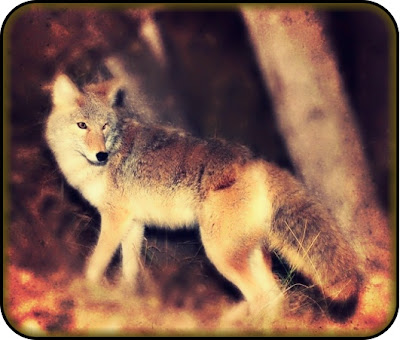
The coyotes aren't so bad.
They take the hint well.
Chicken is pretty tasty, but the risk is too high.


The fox has us outsmarted.
He loves free range chicken.
He knows to do it all quiet-like, or he's gonna get more than chicken.


The Northern Goshawk is a large and graceful predator.
They love chicken.
I wonder what they taste like?


Raccoons are enterprising opportunists.
They have human-like characteristics.
And like humans, they eat chickens and their eggs.
And like humans, they are known to take more than their share.
Unlike humans, they have no constitutional rights.


Bears like their chicken cooked, with barbeque sauce, and sometimes the barbeque too.
But raw and still squawking will do in a pinch.
Bears and barbeque sauce go well together.


Today's photos are taken from free stock and are not ours, with the exception of the chickens.


Tuesday, 24 April 2012

Leaving the Books


We have come to depend on reference books and the Internet for much of what we do here.
Neither of us has any history of farming or self-sufficient living. 
We are also living in a sparsely populated area, and although our friends and neighbors have had knowledge to offer, we fend for ourselves when it comes to hands on learning.
Truthfully, I have used only six or so texts to get us this far. The books have also been inspiring and so have helped propel us on in the early stages.
Recently, Internet access has improved our capacity for learning new skills and reading about other families' experiences. 
It really has been a crucial link to a vast knowledge and experience base.
There was a time when much of what was available online was offered for money or as lead-ins for selling products. The amount of help that is now freely offered has been a great improvement to what ought to be an altruistic education vehicle.
There are times, however, that the Internet doesn't have what we need. Those times seem to coincide with the inability of the books to fill in blanks.


Generally speaking, I am a book person.
That is to say, a book will serve me well as a teaching method.
Of course, the Internet also works well in the same way.
Many people prefer the practical approach that a hands-on experience offers. There is greater context and a more tactile experience.
And, when it comes to homesteading skills, which are mostly manual, nothing is better than seeing it done, holding it in your hands, and witnessing it first hand.
Ideally, I will read about it, research it, and then try it out for myself. This normally works well for everything from building to animal husbandry.
By carefully preparing, we can avoid costly mistakes and make the best of a new experience.
Of course it doesn't always work out.
Let me offer an example.

Remember the homemade soap?
Yes. There were some posts about soap making that we never saw the results from.
Well, it's been long enough for the soap to cure.
The all-purpose cleaner that I have been using for myself is running low.


What is going on with that soap?


Seeing as today was a snow day, it seemed a suitable opportunity to check out the original batches.

They are still not soap.
Some hope though; in some places, the first batch did harden somewhat.
The second batch?
The second batch is still mostly like lard.


It smells like lard.
It feels like lard.
It tastes like lard with a complimentary burning sensation from the strong lye.

I had more hope for the second batch, but it seems that the first one came closer to becoming soap.
So, I went back to the Internet looking for answers.
All I found was more confusion.


My lye could have been too weak.
But, it could also have been too strong.
I could have cooked the soap for too long.
But, I could also have cooked it for not long enough.
There were contradictory statements.
The pioneers made hard soap from Potassium Hydroxide.
I also read that Potassium Hydroxide is only for making soft soap.
There were recipes calling for moderate temperatures.
There were recipes that boiled the concoction for hours.


After a while, I felt as though my books and the internet could not tell me what I needed to know.
I need a person who knows how to make hard soap from wood lye and lard.
I need to see it done.
I need to know if it needs more heat or less.
I need to know what I'm doing wrong.
Not having immediate access to a wood lye soap maker, I was forced into something dark and unpredictable.
Experimenting.

With no sense of direction whatsoever, I just started playing around.
I took the first batch of soap and I put it in a pot to melt it down.
It immediately broke up and looked awful.
It appears that some of it did indeed turn into soap.
The remaining portion was still just melted lard with a hint of burning lye.
Without having any clue at all, I just started handling it to see what it was doing.
I just needed to take one course of action, or apply an idea to the sorry mess that was supposed to be soap.
I decided that, while I had put enough lye into the mix,
perhaps there wasn't enough water.
I describe the event as though it was well thought out. 
In truth, I was forced to simply guess.
So I added water without lye in hopes that it would emulsify the lard and maybe even saponify.


I have the second batch ready to try to finish it.
They say you can't repair broken soap, but I will try, if only to see how the mixture reacts to different conditions.


I believe that we may be entering another phase of experience here on our homestead.
The books have been read and re-read.
The Internet has been put to the test.
We have gone from knowing virtually nothing at all to offering help and advice to others.
But we are not where we want to be yet.
A great deal remains to be learned.
It may be that we must take what we have learned in books and from the online world, and apply it.


Not in the sense of repeating, in person, what we read.


I mean applying the accumulation of experience to solve problems that are not typical or textbook.
To go beyond what the book authors tell us.
Once even the most concise texts have been exhausted, the remaining details become a personal responsibility.


The new soap has been put back into the muffin tin. 
It looks much better than it did before.
This time, I won't be waiting to see if it turns into soap or not.
I just want to see what it does.